On this page
Hadrian's Mausoleum
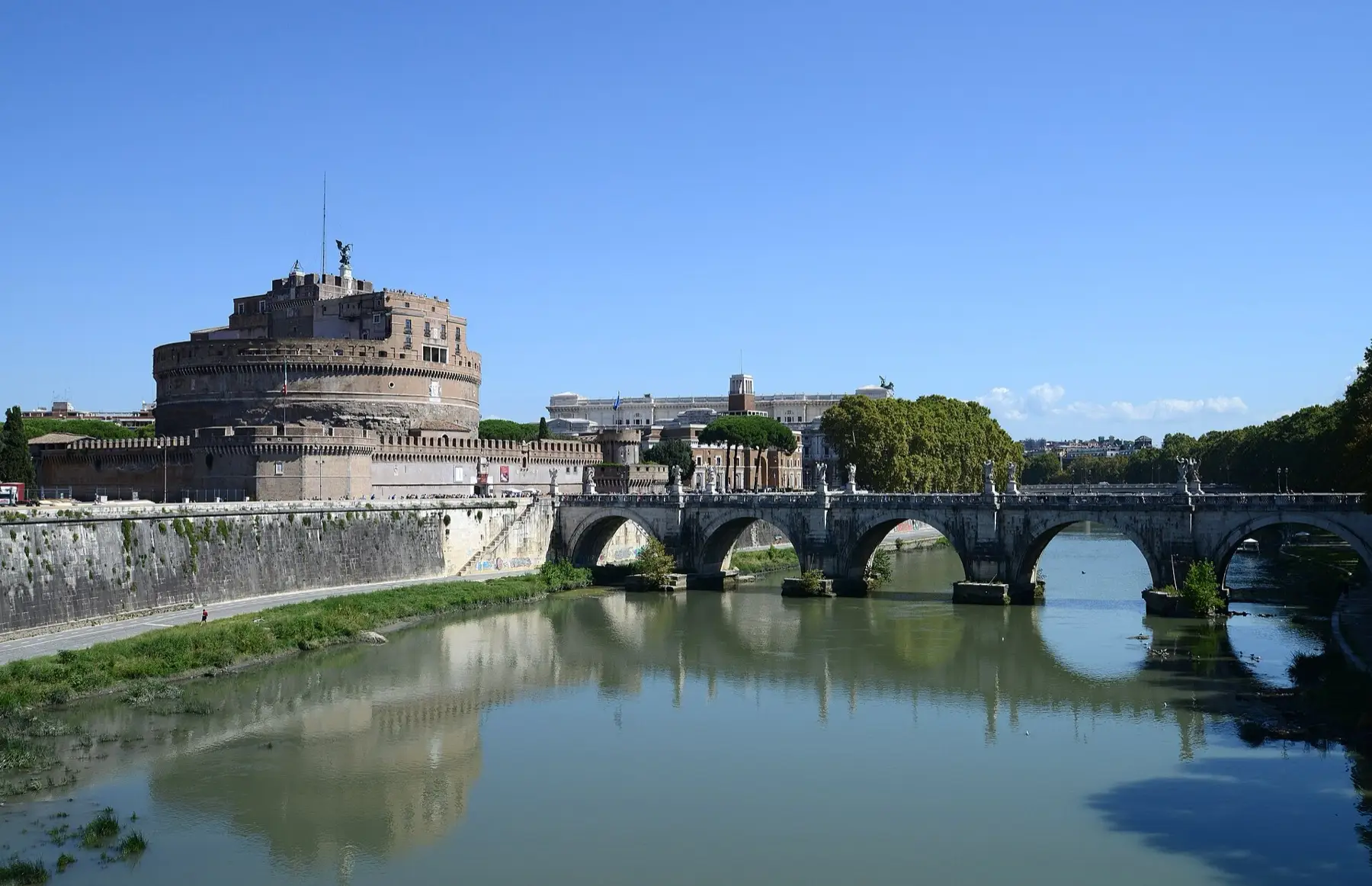
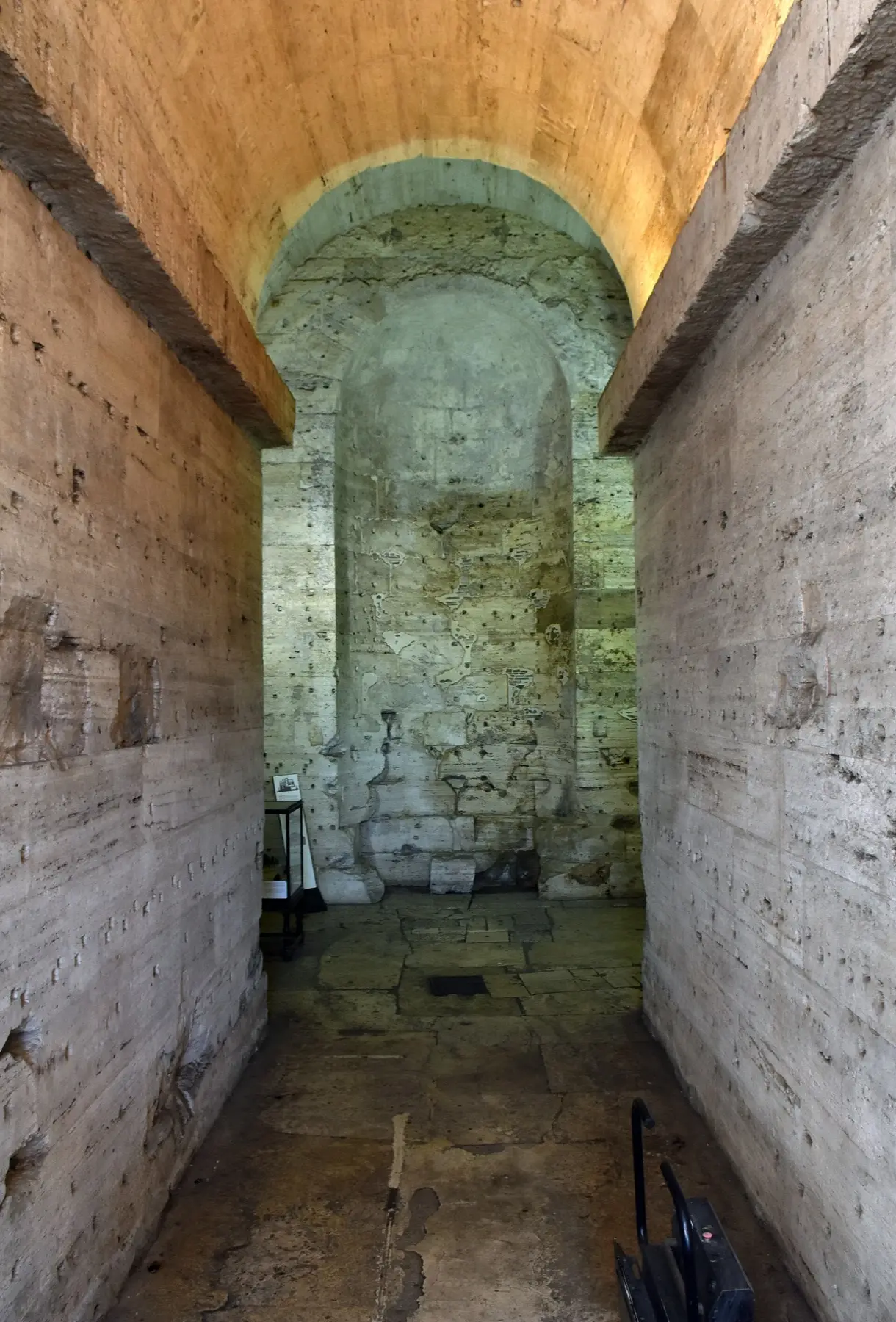
The emperor Hadrian had it built in the 2nd century AD as a tomb for himself and his family: the Mole Adriana. Wikipedia dates the works to 134–139 AD.
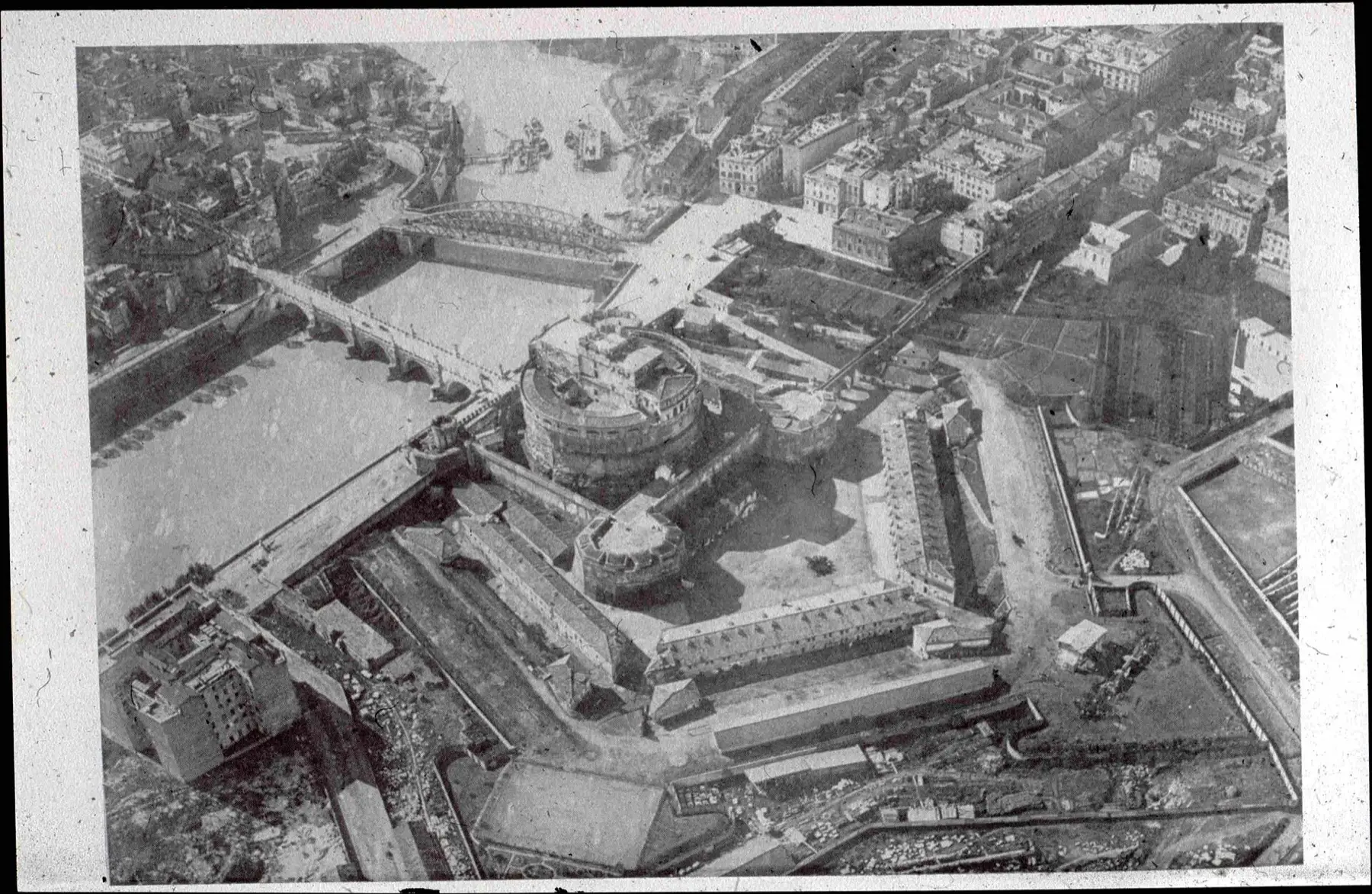
It was later included in the walls of Rome and turned into a stronghold for the defence of the city, which earned it the name castellum.
Why “Sant'Angelo”
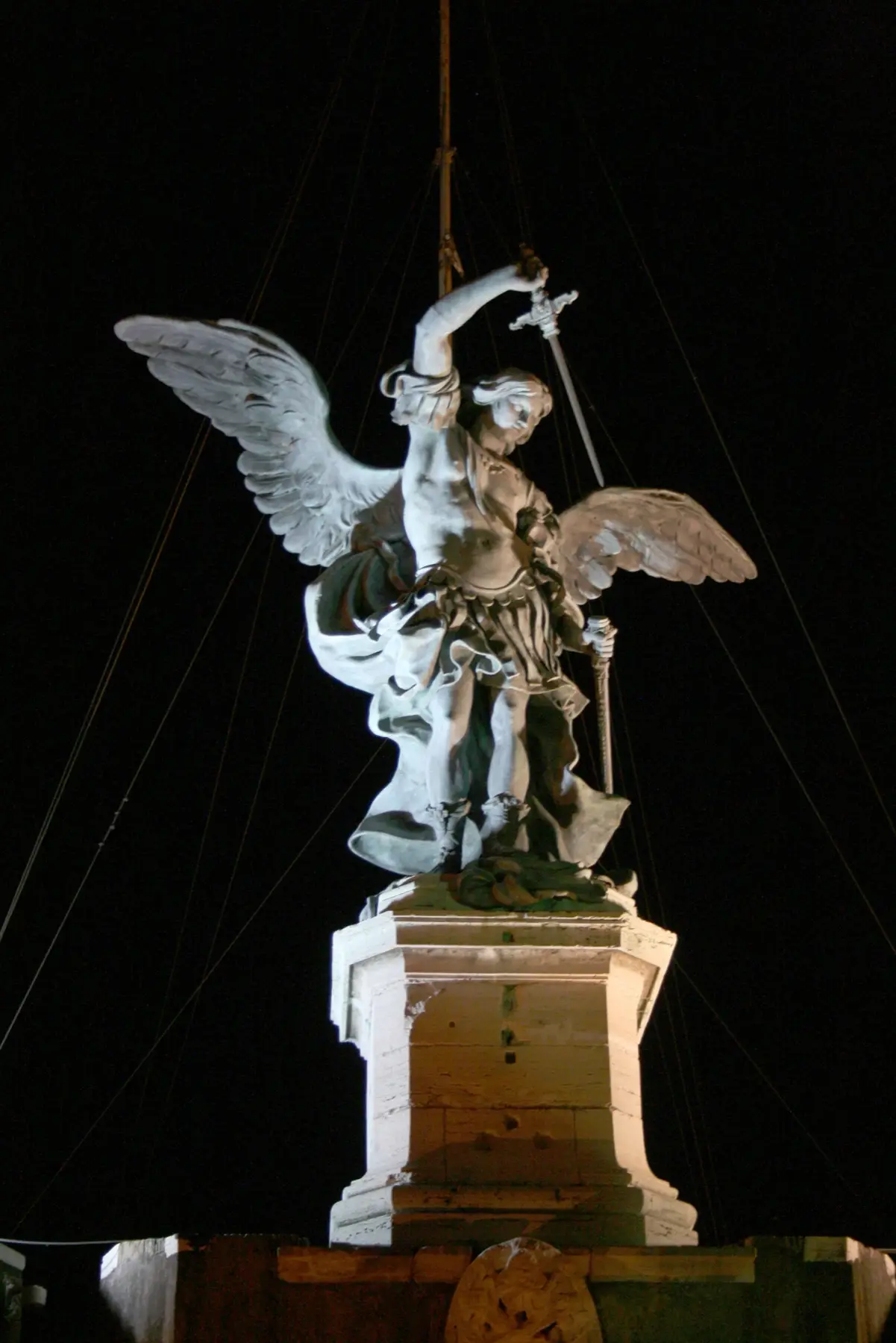
In the early Middle Ages the building took the name sancti Angeli from the legend that in 590 Pope Gregory the Great saw the Archangel Michael here, sheathing his sword: the sign that the plague afflicting Rome was over.
According to Wikipedia, a marble angel by Raffaello da Montelupo (1536) stood on top until 1753, when the bronze by Peter Anton von Verschaffelt replaced it.
The popes' castle
In 1367 the keys of the building were handed to Pope Urban V. The castle became a papal residence and reached its greatest splendour under Paul III Farnese (1534–1549), whose apartment you see today.
A raised corridor, the Passetto di Borgo, linked it with the Vatican. In the Sack of Rome of 1527, Pope Clement VII fled along it and took refuge in the castle: Passetto di Borgo.
Prison, barracks, museum
From the 17th century the castle slowly stopped being a papal residence and became almost only a political prison. According to Wikipedia its prisoners included Giordano Bruno, the goldsmith Benvenuto Cellini and Cagliostro.
In 1870 it passed to the Italian State as a military prison and barracks, and in 1925 it became a National Museum.
Tosca, cinema and fireworks
- According to Wikipedia, the castle is the setting of Act III of Puccini's Tosca, whose heroine leaps from its ramparts.
- The museum recalls that Luchino Visconti took his first steps in Italian cinema here, with Tosca, and shot a scene of Senso at the castle.
- The Girandola fireworks, documented since 1481 and long tied to the feast of Saints Peter and Paul, returned on 29 June 2026: Ponte Sant'Angelo.
Questions and answers
Who built Castel Sant'Angelo?
The emperor Hadrian, in the 2nd century AD, as a tomb for himself and his family.
When was Castel Sant'Angelo built?
In the 2nd century AD; Wikipedia dates the works to 134–139 AD.
Why is it called Sant'Angelo?
From the legend that in 590 Pope Gregory the Great saw the Archangel Michael sheathe his sword above it, ending the plague.
When did it become a museum?
In 1925.
Where our information comes from
- Castel Sant'Angelo: history (in Italian) — checked on 28 October 2026
- Castel Sant'Angelo: history of the Passetto (in Italian) — checked on 28 October 2026
- Castel Sant'Angelo: Visconti exhibition (in Italian) — checked on 28 October 2026
- Castel Sant'Angelo: the Girandola (in Italian) — checked on 28 October 2026
- Wikipedia: Castel Sant'Angelo — checked on 28 October 2026